
Industry 4.0: Integrating IoT and AI for More Efficient Manufacturing Plants
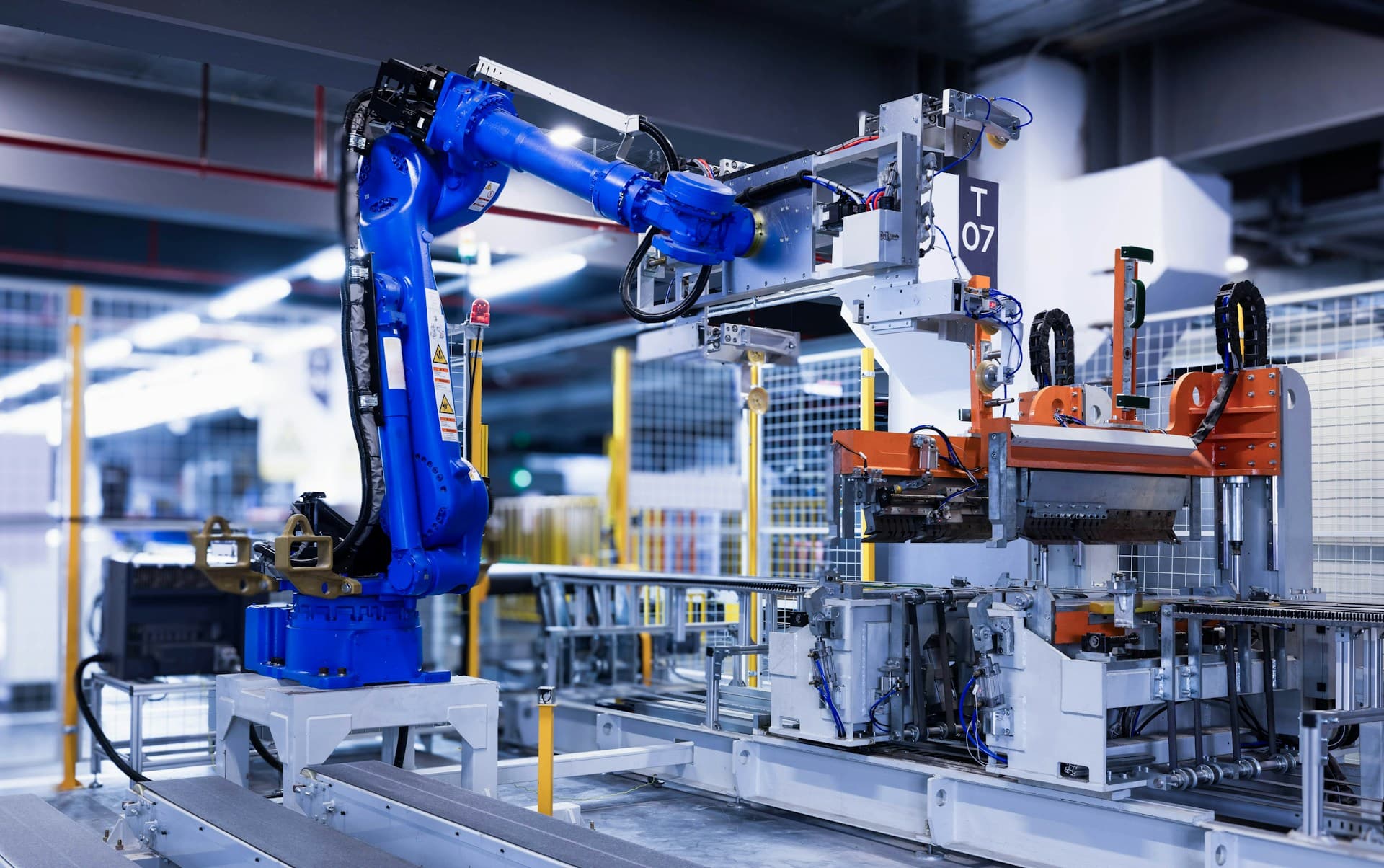
Industry 4.0 represents the convergence of digital, physical, and biological technologies that are redefining manufacturing. At its core, the combination of Internet of Things (IoT) connecting machines and sensors, with artificial intelligence analyzing data and optimizing operations, is creating smart factories capable of self-optimization, real-time adaptation, and unprecedented efficiency.
From Automation to Intelligence
Manufacturing plants have experienced previous revolutions: mechanization with steam, mass production with electricity, automation with electronics and computers. Industry 4.0 adds intelligence and total connectivity. It's not just about automating existing processes but fundamentally reimagining how to produce.
Traditional automated factories execute fixed programs. Smart factories continuously adapt their operation based on changing conditions, variable demand, and real-time data.
Total Connectivity: The Role of IoT
Industrial IoT connects every machine, sensor, and device in the plant. Sensors capture temperature, vibration, pressure, flow, electrical consumption, product quality, and hundreds of other parameters. This data flows continuously to centralized platforms where AI algorithms analyze it.
This total visibility enables real-time monitoring of the entire operation, immediate detection of deviations, analysis of correlations between variables, and comprehensive optimization considering the complete plant.
An automotive component factory in Spain installed 5000 IoT sensors capturing 50 million data points daily. This infrastructure enabled optimizations that increased productivity 12 percent in 18 months.
Predictive Maintenance at Industrial Scale
With IoT connectivity and AI analytics, predictive maintenance is implemented on every critical asset. Algorithms learn normal vibration signatures of each machine and detect deviations that precede failures. Predictions of remaining useful life of components optimize replacement. Maintenance coordination minimizes production impact. And root cause analysis identifies systemic improvements.
An electronics manufacturer reduced unplanned downtime 45 percent implementing predictive maintenance with IoT and AI, increasing availability of critical lines from 85 to 94 percent.
Real-Time Process Optimization
AI continuously analyzes process parameters identifying optimal configurations. In thermal processes, it adjusts temperatures and times to maximize energy efficiency while maintaining quality. In material mixing, it optimizes proportions based on specific batch properties. In assembly lines, it balances load between stations minimizing bottlenecks.
These optimizations occur automatically thousands of times a day, continuously refining operation in ways impossible manually.
Intelligent Quality Control
Machine vision systems inspect products at speeds impossible for humans. On continuous production lines, each piece is completely inspected. Defects are detected instantly. Classification occurs in real-time. And feedback to process enables immediate problem correction.
Beyond inspection, AI correlates defects with process parameters identifying root causes. This enables preventive interventions before defects are produced.
A plastic component manufacturer reduced defect rate from 3.5 to 0.8 percent implementing quality control with machine vision and AI, saving millions in rework and waste.
Intelligent Energy Management
Energy consumption represents significant cost in manufacturing. AI systems optimize energy use by predicting demand and adjusting operations to minimize consumption in high-tariff periods, optimizing operation sequence to minimize demand peaks, coordinating with on-site renewable generation when available, and identifying equipment with anomalous consumption requiring maintenance.
A chemical plant reduced energy costs 18 percent without reducing production through intelligent scheduling optimization.
Adaptive Production Planning
AI transforms production planning from periodic exercise to continuous process. Systems automatically adjust schedules based on real-time demand, raw material availability, equipment status, and resource capacity.
Machine learning predicts future demand more accurately than traditional statistical methods, enabling proactive planning. Optimization simultaneously considers multiple objectives: maximize throughput, minimize inventory, optimize product changeovers, and balance workload.
Digital Twins of Production Lines
Digital twins replicate complete production lines virtually. These models updated with real-time data enable simulating changes before implementing them, predicting effects of operational decisions, training operators in virtual environment, and optimizing configurations without experimenting on real plant.
A consumer goods manufacturer uses digital twin to test new line configurations, reducing implementation time from weeks to days and minimizing disruption risk.
Traceability and Total Quality
Each product carries unique identifier tracked through production. This enables complete traceability of raw materials used, equipment and operators involved, process parameters applied, and quality inspections performed.
In case of defect, it's instantly identified what other products may be affected. For improvement analysis, defects are correlated with every aspect of the process. And for regulatory compliance, complete documentation is provided automatically.
Collaborative Robotics and AI
Cobots (collaborative robots) work alongside humans safely. Equipped with AI, these robots learn tasks by observing humans, adapt behavior to variations in pieces or conditions, and collaborate intelligently yielding control when appropriate.
This combines human flexibility and judgment with robotic precision and consistency, maximizing strengths of both.
Integrated Supply Chain Management
Industry 4.0 extends connectivity beyond the plant. Real-time visibility of supplier inventories enables precise just-in-time production. Demand prediction is shared with complete supply chain. And comprehensive coordination minimizes inventories while maximizing availability.
Blockchain combined with IoT provides immutable traceability from supplier to final customer.
Training and Human Augmentation
Augmented reality guides workers in complex tasks showing instructions superimposed on field of vision. AI suggests best practices based on analysis of thousands of previous operations. And decision support systems assist operators in anomalous situations.
This accelerates training of new workers and increases effectiveness of experienced ones.
Transformation Challenges
The transition to Industry 4.0 presents significant challenges. Initial investment in sensors, connectivity, and software can be considerable. Integration with legacy equipment requires creative solutions. Cybersecurity becomes critical with increased connectivity. And cultural change requires traditional personnel to adopt new ways of working.
However, gradual approach prioritizing use cases with highest return enables demonstrating value while building capacity.
Transformation Metrics
Leading manufacturers document impacts: 15-25 percent increase in overall productivity, 20-40 percent reduction in maintenance costs, 30-50 percent decrease in quality defects, 15-30 percent reduction in energy consumption, and 20-35 percent improvement in asset utilization.
These benefits typically generate ROI in 2-4 years depending on investment and complexity.
The Future: Autonomous Factories
Evolution continues toward increasingly autonomous factories. AI systems will make complex operational decisions without human intervention. Lines will reconfigure automatically for new products. Maintenance will be completely predictive and self-managed. And production will continuously optimize through machine learning.
Humans will focus on strategic supervision, innovation, and complex problem-solving, while AI handles continuous operational optimization.
Look, the difference between a plant with Industry 4.0 and a traditional one is brutal. I visited two factories of the same group in Spain: one with 5000 connected IoT sensors, another operating like 15 years ago. The first detected a motor problem three days before it failed, avoiding a 12-hour shutdown that would have cost 180 thousand euros. The second had exactly that problem two weeks later. The machine burned out and they were down for two days.
You don't need to transform the entire plant at once. That automotive component manufacturer started with predictive maintenance on three critical assets. When they saw 45% fewer unplanned shutdowns in six months, the ROI sold the expansion to the rest by itself. Now they have 94% availability versus 85% before, and that difference is millions in additional production.
Is it worth it? Depends on whether you can afford to produce with 10-20% less efficiency than your competition. Because that's what's happening: smart plants are getting more product, with better quality, using less energy. And that gap grows every month. We're not talking about the distant future, we're talking about the competitive advantage separating leaders from the rest right now.